
Best Shrubs & Bushes for Making Natural Green Fences
- Paramjeet Dhillon
- Nov 25, 2025
- 4 min read

Perfect for Front-Yard Privacy, Farmhouses & Home Gardens
If you want a boundary that looks beautiful, stays green, blocks dust, and adds privacy without building a wall, a natural green fence is the best choice. Shrubs and bushes grow fast, require low maintenance, and blend beautifully with any landscape.In India’s climate, many hardy shrubs perform exceptionally well with just sunlight, regular watering, and a boost of organic vermicompost for healthy growth.
Here’s a simple guide to help you pick the best plants for your natural green fence.
1. Duranta (Golden Dewdrop)

Why it’s great:
Fast-growing
Bright yellow/green foliage adds instant color
Excellent for shaping and trimming
Best for: neat, clean-looking borders and driveways.
2. Ficus Benjamina (Weeping Fig Hedge)

Why it’s great:
Dense leaves that give strong privacy
Easy to trim into square or round shapes
Ideal for both small gardens and big farmhouses
Tip: Responds well to organic vermicompost every 30–45 days.
3. Henna (Mehndi Hedge)

Why it’s great:
Fresh green leaves with a natural fragrance
Grows well even in harsh sunlight
Traditional and evergreen choice
Perfect for: rustic, Indian-style gardens.
4. Boxwood (Buxus)

Why it’s great:
Popular for formal gardens
Can be shaped beautifully
Slow-growing but very long-lasting
Best for: neat, geometric green fencing.
5. Privet (Ligustrum Ovalifolium)

Why it’s great:
Very fast-growing
Fills up gaps quickly
Gives a thick, evergreen hedge
Ideal: When you want privacy in 3–6 months.
6. Jasmine (Mogra / Jai)
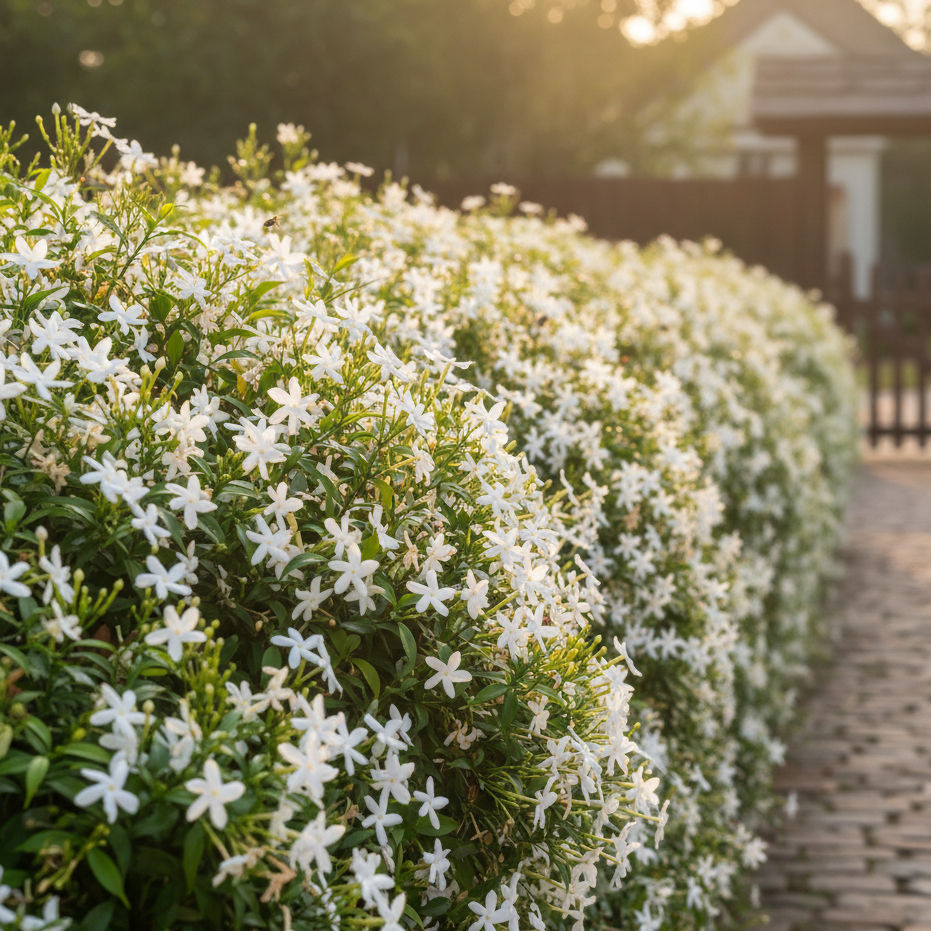
Why it’s great:
Adds beautiful fragrance
Gives a natural, soft-looking hedge
Perfect near entrances and pathways
Bonus: Seasonal flowers attract pollinators.
7. Bougainvillea Hedge

Why it’s great:
Colorful and bold
Low-maintenance and drought-tolerant
Acts as a natural security fence (thorny variety)
Use for: farmhouses, large boundaries, and sunny locations.
8. Clerodendrum (Glory Bower)

Why it’s great:
Fast-growing shrub
Rich green leaves + seasonal white/red flowers
Perfect for attractive borders
Looks best: along boundary walls or driveways.
9. Cassia Alata (Candle Bush)
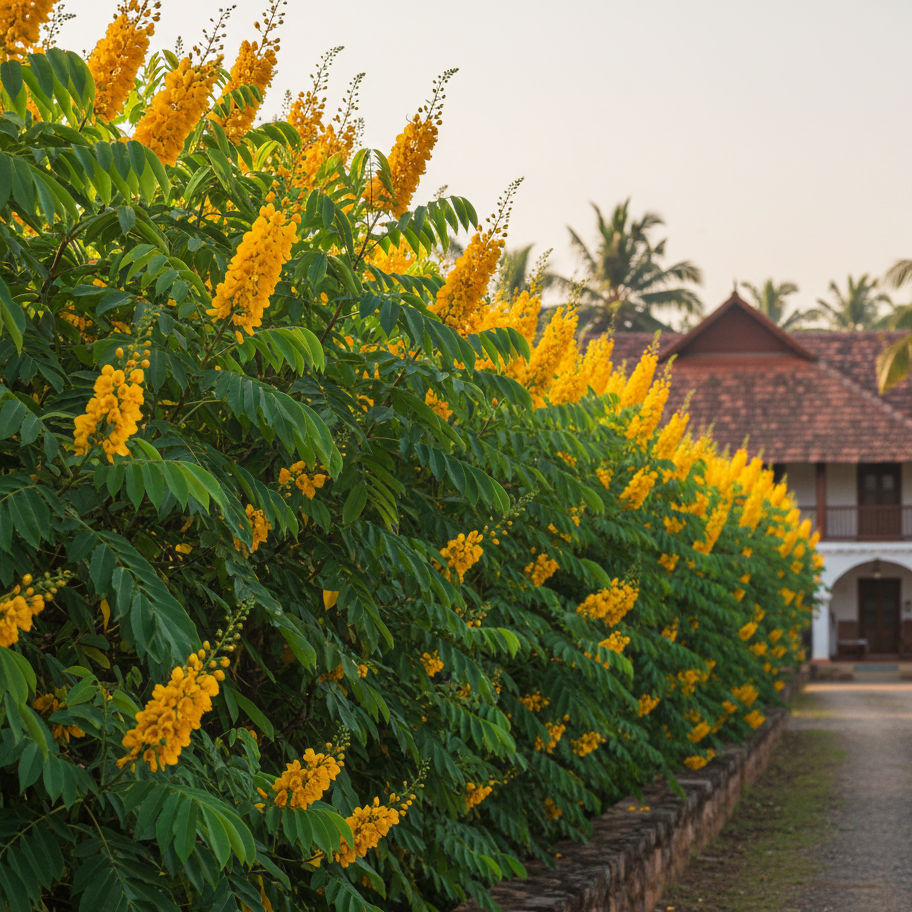
Why it’s great:
Bright yellow flower spikes
Large green leaves
Adds height and tropical beauty
Great for: farmhouse fencing and backyard perimeters.
How to Maintain a Healthy Green Fence🌿
No matter which shrub you choose, a few basic care tips will keep the fence thick and evergreen:
✔ Use a nutrient-rich soil mix
Mix garden soil + sand + Harit Mantra Vermicompost for faster root development and greener foliage.
✔ Prune regularly
Trim lightly every 20–30 days to maintain shape and density.
✔ Water deeply
Watering at the base helps roots grow strong and reduces leaf drop.
✔ Mulch the base
Keeps soil cool, improves moisture, and prevents weeds.
✔ Feed with vermicompost
Add 1–2 handfuls per plant every month for natural growth and resistance.
FAQs: Natural Green Fences (Shrubs & Bushes)
1. Which plants are best for making a natural green fence in India?
Duranta, Ficus, Privet, Jasmine, and Bougainvillea are among the best plants for green fences in India because they grow fast and stay evergreen.
2. What are the fastest-growing hedge plants for home gardens?
Duranta, Privet, and Clerodendrum are excellent fast-growing hedge plants that quickly form a thick natural privacy fence.
3. Which shrubs require low maintenance?
Henna, Ficus Benjamina, and Indian Hawthorn are low-maintenance hedge plants perfect for beginners and busy homeowners.
4. Which shrubs are best for privacy fencing?
Ficus, Privet, and Buxus create dense foliage, making them ideal privacy fence plants for front yards and farmhouses.
5. What are the best evergreen shrubs for landscaping?
Plants like Bougainvillea, Buxus, Jasminum, and Cassia Alata are great evergreen shrubs that keep your landscape green year-round.
6. How much spacing should I keep between hedge plants?
Maintaining a spacing of 1–1.5 feet ensures the hedge grows thick and uniform — a key tip for natural green fence landscaping.
7. Which hedge plants grow well in full sun?
For sunny locations, choose Bougainvillea, Duranta, Cassia Alata, and Henna, which are strong sun-loving hedge plants.
8. Which hedge plants grow in partial shade?
Jasmine, Clerodendrum, and Indian Hawthorn are the best shade-tolerant shrubs for semi-shaded areas.
9. How much vermicompost should I add to hedge plants?
Add 1–2 handfuls of organic vermicompost per plant every month to boost growth, color, and disease resistance. This is essential for healthy landscaping shrubs.
10. Can I grow green fence plants in pots?
Yes, shrubs like Duranta, Jasmine, and Buxus grow well in large containers. They are perfect potted hedge plants for balconies and terraces.
11. How long does a natural hedge take to grow fully?
Most natural fence plants take 3–12 months to grow into a thick, mature hedge, depending on the plant type and climate.
12. Do hedge shrubs help reduce dust and heat?
Yes, thick shrubs such as Ficus and Privet act as a natural dust barrier and help regulate temperature in hot areas.
Final Thoughts
A natural green fence does more than mark your boundary — it purifies air, reduces heat, increases privacy, and makes your home look fresh and welcoming. Choose shrubs based on your space, sunlight, and design style. With a little trimming and organic care, your green fence can stay lush and beautiful all year long.


Comments