
How to Multiply Plants Naturally at Home
- Paramjeet Dhillon
- Nov 3, 2025
- 3 min read

Do you love your plants and wish you could grow more of them for free?
Good news — you can! 💚
Plants have their own natural ways to multiply. You don’t need any chemical powder or fertilizer — just simple home methods and a little care. Let’s learn how to grow more plants naturally!
Here’s your complete guide on how to multiply plants naturally without chemicals — the Harit Mantra way.
Why Multiply Plants Naturally?
Natural propagation is not just cost-effective — it’s eco-friendly and healthier for both soil and plants.Here’s why it’s worth it:
No chemical residue in soil
Stronger, naturally rooted plants
Cost-free and sustainable
Keeps beneficial microbes alive in soil
1. Stem Cuttings — The Most Common Method

This is the easiest way to grow new plants from old ones.
How to do it:
Cut a healthy stem about 4–6 inches long (from plants like money plant, rose, hibiscus, mint, etc.).
Remove the lower leaves.
Place the stem in clean water or directly into cocopeat + compost mix (1:1 ratio).
Keep it in shade for 7–10 days.
Within days, roots will start growing — completely naturally!
💚 Tip: Add a few drops of aloe vera gel to the water — it acts as a natural rooting hormone.
2. Leaf Propagation — Nature’s Hidden Trick
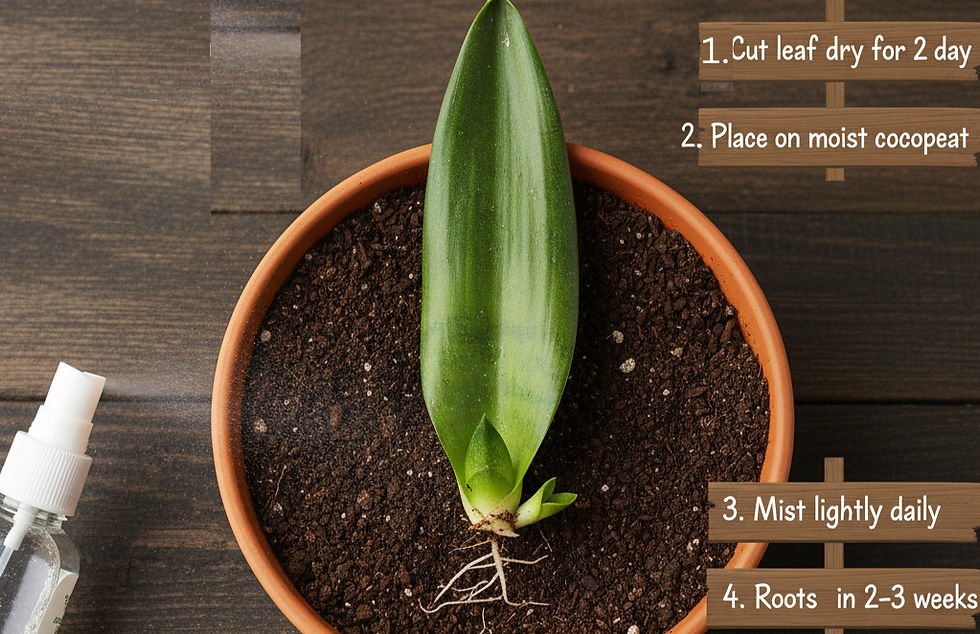
Some plants can grow a whole new life from just one leaf!This method works well for succulents, snake plants, and bryophyllum.
How to do it:
Cut a healthy leaf and let it dry for one day.
Place it on moist cocopeat or compost mix.
Mist water lightly once a day.
Roots will appear within 2–3 weeks, and new leaves will start forming naturally.
3. Division Method — For Bushy Plants

For plants that grow in clumps (like aloe vera, peace lily, or lemongrass), dividing them is the easiest way to multiply.
Steps:
Carefully remove the whole plant from the pot.
Gently separate sections with roots attached.
Replant each section into its own pot with organic compost and cocopeat.
Each divided plant will grow into a new healthy one in a few weeks.
4. Layering — Let the Plant Root Itself

This method is great for plants like jasmine, rose, or money plant vines.
How to do it:
Bend a branch to touch the soil while still attached to the parent plant.
Cover part of it with soil, leaving the tip exposed.
After 2–3 weeks, roots will form at the covered part.
Cut it and pot it separately.
It’s like cloning plants — naturally!
5. Use Natural Root Boosters.

You don’t need chemical rooting powders. Nature already gives us gentle boosters:
Aloe vera gel: Natural growth hormone
Honey: Has antibacterial properties and helps root formation
Coconut water: Full of minerals and enzymes
Cinnamon powder: Prevents fungal infections during propagation
Dip your cuttings in one of these before planting for faster natural rooting.
6. Feed with Organic Compost

Once your new plants start rooting, give them strength naturally.Use:
Vermicompost for balanced nutrition
Cow dung compost for nitrogen
Banana peel compost for potassium
Harit Compost for overall soil health and microbial activity
Feed once every 20–25 days. No chemicals, no stress — just pure organic growth.
Tips for Successful Natural Propagation
✅ Always use clean pots and tools
✅ Keep soil slightly moist — not soggy
✅ Avoid harsh sunlight for new cuttings
✅ Be patient — natural methods take a little longer, but results last longer too
Final Thought
Multiplying plants naturally is simple, sustainable, and deeply rewarding. Each new plant is a symbol of your care and the magic of nature itself. 🌿
So next time you see a healthy stem, leaf, or branch — don’t throw it away.Grow it, nurture it, and let nature multiply your green world — the Harit way!


Comments